After nearly two years, we have come to the end of our study in Genesis. I hope you have found this study enlightening. I welcome your comments and critiques, so that I can improve the quality of future studies. God bless you.


Study in Genesis with the Becky Bereans
After nearly two years, we have come to the end of our study in Genesis. I hope you have found this study enlightening. I welcome your comments and critiques, so that I can improve the quality of future studies. God bless you.
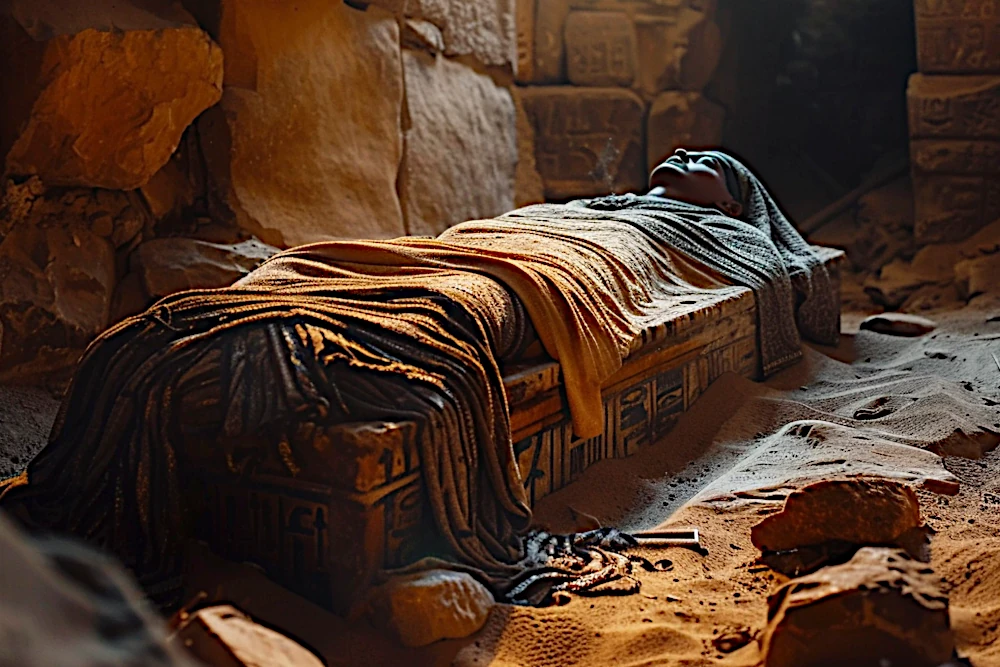
Jacob’s sons brought their father’s body up from Egypt to Canaan and buried him in the Cave of Machpelah per Jacob’s final wishes. Afterward, Joseph and his brothers returned to Egypt where Joseph died aged 110. Before he died, Joseph called his brothers to him and foretold that God would one day bring the nation of Israel back from Egypt to Canaan. Joseph directed them to bring his own bones up from Egypt with them and bury him in Canaan. Then Joseph died and was placed in a coffin in Egypt until the day God brought His people up from Egypt.
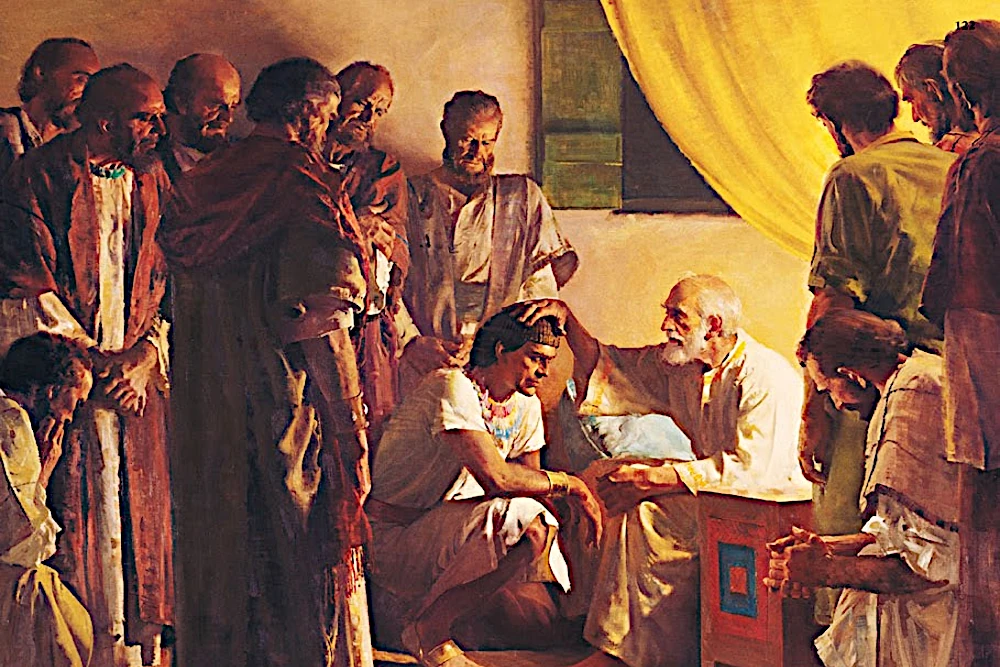
After blessing Ephraim and Manasseh the sons of Joseph, Jacob called his twelve sons to him, and pronounced blessings, chastisements, and prophecies upon them. Once he had done so, Jacob directed his sons not to bury him in Egypt but to bring his body back to Canaan and bury him in the cave of Machpelah which Abraham had purchased centuries before as a burial place for his family. After giving his final wishes to his sons, Jacob died at the age of 147.
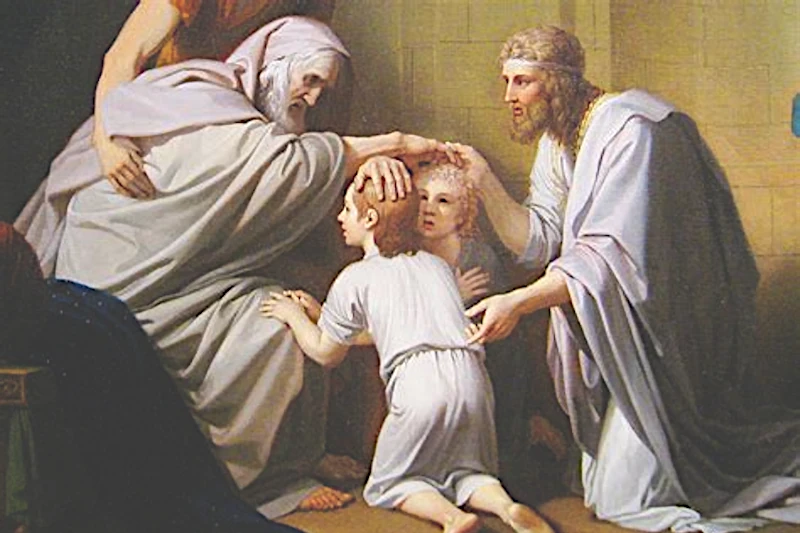
Just before he died, Jacob called his son Joseph to his bedside along with Joseph’s sons Manasseh and Ephraim. Jacob began by claiming Ephraim and Manasseh as his own – making them co-heirs with Joseph’s brothers who became founders of tribes of Israel in their own right. This leads to considerable confusion in listings of the 12 tribes of Israel found later in God’s Word. Although Manasseh was the firstborn of Joseph, Jacob gave his younger brother Ephraim preeminence over Manasseh in his blessing. Over a century earlier, Jacob had conspired with his mother Rebekah to deceive his own father Isaac into giving the firstborn blessing and birthright to Jacob over his elder twin brother Esau.
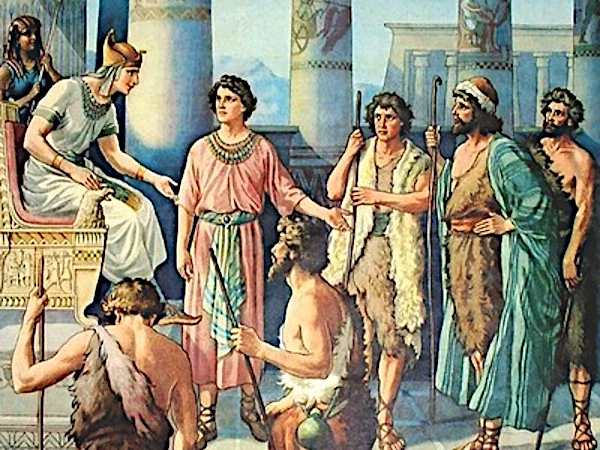
After his family journeyed to the land of Goshen in Egypt, Joseph brought five of his brothers and his father Jacob before Pharaoh. Jacob blessed Pharaoh, who invited the family to settle in Goshen. During the final five years of the famine, Joseph acting in Pharaoh’s behalf nationalized the entire economy of Egypt – accepting first all the people’s money, then their livestock, and finally their land and their servitude for Pharaoh in exchange for the food that had been stored during the preceding seven years of plenty. The statute Joseph enacted making the people Pharaoh’s servants applied equally to native Egyptians and to the Israelites sojourning in the land of Goshen.
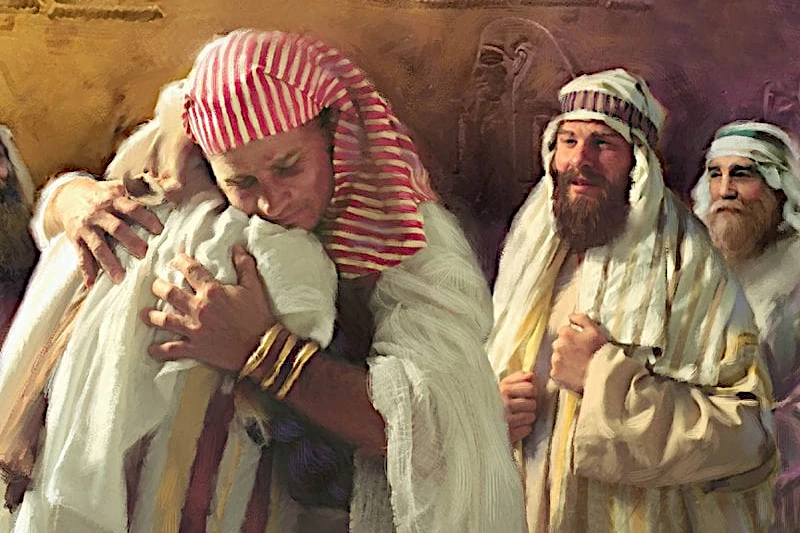
Joseph finally revealed his true identity to his brothers, and sent them back to Canaan to bring Jacob and the rest of the family down to Egypt. When they arrived, they settled in the land of Goshen along the eastern fringe of the Nile delta.
When Joseph sent his brothers back to Canaan carrying a second shipment of grain, he played a trick on them by having his steward place a silver cup in Benjamin’s sack. Then he sent the steward after them, to accuse them of theft. After rashly saying that whoever was found in possession of the cup should be put to death, the brothers returned to Joseph where Judah pleaded for Benjamin’s life offering himself in Benjamin’s place.
Having depleted the food they had bought from Joseph on their first trip to Egypt, Joseph’s brothers returned to Egypt – this time bringing Joseph’s younger brother Benjamin with them as Joseph had commanded. Joseph brought them all into his home and dined with them, but still didn’t reveal to them who he was.
The famine foretold in Pharaoh’s dreams began to affect Jacob’s family in Canaan. Hearing that grain was available in Egypt, Jacob sent his ten eldest sons there to buy food. Like all the Egyptians, Joseph’s brothers had to deal with Joseph to obtain the grain. When they came to him, Joseph recognized them but they didn’t recognize him. He provided them with the grain they needed, but told them they should not return unless they brought his younger brother Benjamin with them. Joseph sent them back to Canaan, but held Simeon as a hostage to secure their promise to return with Benjamin.